
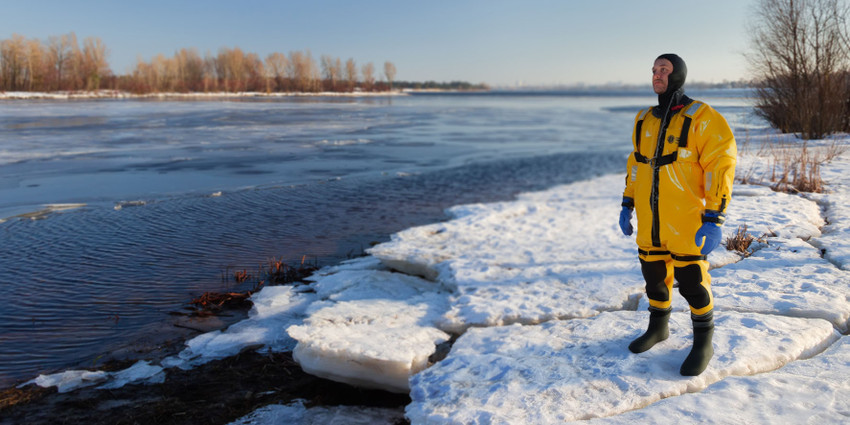
How to Choose the Right Ice Rescue Dry Suit
Ice rescue operations place responders in one of the most demanding environments they can face. Freezing water, unstable ice, wind, and rapidly changing conditions can quickly turn a rescue into a life-threatening situation for both the victim and the responder. Having the right protective equipment is essential, and an ice rescue dry suit is one of the most important pieces of PPE for teams operating in cold-water environments.
Choosing the right dry suit goes beyond simply keeping water out. Rescue professionals need to consider thermal protection, entry and closure systems, mobility, buoyancy, durability, visibility, and how quickly the suit can be deployed when a call comes in.
UNDERSTANDING ICE RESCUE vs. STANDARD DRY SUITS
Not all dry suits are designed for the same environment. Standard dry suits used for paddling, diving, or general water operations often prioritize waterproofing and mobility, with thermal protection depending largely on the layers worn underneath.
Ice rescue suits are designed around a different set of operational demands. Responders may be exposed to near-freezing water, unstable ice, wind, and difficult working conditions while still needing the mobility to reach and assist a victim. For rescue teams, this makes thermal protection, flotation, visibility, durability, and rapid deployment important considerations when selecting a suit.
Purpose-built systems such as the Mustang Ice Commander IC-9001 Ice Rescue Suit combine several of these features into equipment specifically designed for cold-water and ice rescue operations
THERMAL PROTECTION IN COLD-WATER RESCUE
Cold-water exposure can quickly affect a responder’s strength, coordination, and ability to perform technical rescue tasks. An effective ice rescue suit should help reduce direct exposure to cold water while providing insulation appropriate for demanding rescue operations. Thermal protection becomes especially important during extended operations, training exercises, or situations where rescuers may spend significant time in or near freezing water.
In ice rescue, thermal protection is everything. Water removes body heat up to 25 times faster than air, and without proper insulation, survivability drops quickly.
Unlike recreational dry suits that rely heavily on layering, dedicated ice rescue suits incorporate integrated thermal systems. The Mustang Ice Commander uses a zip-in buoyancy liner made of closed-cell foam, providing both flotation and insulation. This allows rescuers to remain functional during extended immersion in icy conditions.
This integrated approach reduces reliance on undergarments and ensures consistent performance across different users and conditions, critical for departments issuing shared gear.
Key takeaway:
Look for suits that combine thermal insulation + flotation, not just waterproof shells.
ENTRY DESING AND RAPID DEPLOYMENT
Entry design can affect how quickly responders can get into their equipment and prepare for deployment. During an ice rescue, a suit should be straightforward to put on while still providing a secure watertight closure.
Entry design impacts both deployment speed and operational safety. Front-entry designs can make donning and doffing more efficient and allow team members to visually check the closure before deployment. Over-the-head or shoulder-entry designs may use a simpler construction but can require additional movement when getting into the suit.
The Mustang Ice Commander features a full-length watertight zipper, enabling quick entry while maintaining a secure seal.
In real-world ice rescue, where seconds matter, front-entry systems are typically preferred.

MOBILITY AND RANGE OF MOTION
Ice rescue operations require significantly more movement than simply entering the water. Responders may need to crawl across unstable ice, climb onto a rescue platform, maneuver around obstacles, pull a victim, operate ropes, or transition between ice and open water.
A properly designed rescue dry suit should support these movements while maintaining protection. Fit is especially important. A suit that is too restrictive can interfere with movement, while excessive material can make swimming and equipment handling more difficult.
DURABILITY FOR RESCUE OPERATIONS
Professional rescue equipment needs to withstand repeated training and operational use. Ice, rough surfaces, rescue sleds, ropes, and other equipment can expose a dry suit to significant wear.
Departments should consider the construction of the suit, reinforcement in high-wear areas, and its ability to withstand the conditions in which the team regularly operates. Proper inspection, cleaning, drying, and storage are also essential for maintaining the suit's performance over time.
VISIBILITY ON THE ICE AND IN THE WATER
Visibility is another important consideration during ice rescue operations. Responders may operate in snow, low light, poor weather, or large bodies of water where maintaining visual contact can be challenging.
High-visibility materials and reflective elements can make it easier for team members and incident command to identify rescuers during an operation. This can be especially valuable when multiple responders are working across a large rescue area.
WHY THE MUSTANG ICE COMMANDER IC-9001 STANDS OUT
The Mustang Survival Ice Commander IC-9001 is designed specifically for ice and cold-water rescue operations, making it a strong option for fire departments, rescue teams, and other professional responders who need purpose-built protection.
Rather than adapting equipment designed for recreational use, the Ice Commander is built around the requirements of professional rescue environments. Its design combines cold-water protection with the mobility and functionality responders need when working on unstable ice and in freezing water.
For teams evaluating ice rescue PPE, the Ice Commander provides a practical solution for operations where protection, visibility, mobility, and rapid response all matter.
The Mustang Ice Commander has become a standard across fire departments, SAR teams, and ice rescue units for a reason.
What sets it apart:
- Fully waterproof system with integrated hood, gloves, and boots
- Detachable AirSoft™ foam liner for flotation and thermal protection
- Integrated chest harness for tethered operations
- Reinforced knees and non-slip boots for ice mobility
- High-visibility welded nylon shell, lighter than many comparable suits
- Designed for extended immersion while maintaining physical and mental performance
This combination of features eliminates the need to piece together multiple systems. It arrives as a ready-to-deploy solution aligned with real rescue workflows.

CHOOSING THE RIGHT SUIT FOR YOUR TEAM
The right ice rescue dry suit should match your department's operational environment, training procedures, response frequency, and existing equipment. Teams should consider how quickly responders can deploy the suit, how well it integrates with other PPE, the level of thermal protection required, and whether responders can comfortably perform essential rescue movements while wearing it.
Equipment selection should also be supported by regular training. Responders need experience entering the water, moving across ice, handling victims, and operating rescue equipment while wearing the suit. Familiarity with the equipment before an emergency can make a significant difference when conditions become difficult.
PREPARE BEFORE THE CALL
Ice rescue operations leave little room for equipment that is difficult to deploy or poorly suited to the environment. Selecting a purpose-built dry suit and training with it regularly can help teams prepare for the realities of cold-water response.
For departments and rescue professionals preparing for winter operations, the Mustang Ice Commander IC-9001 offers a specialized solution designed for demanding ice rescue environments.